
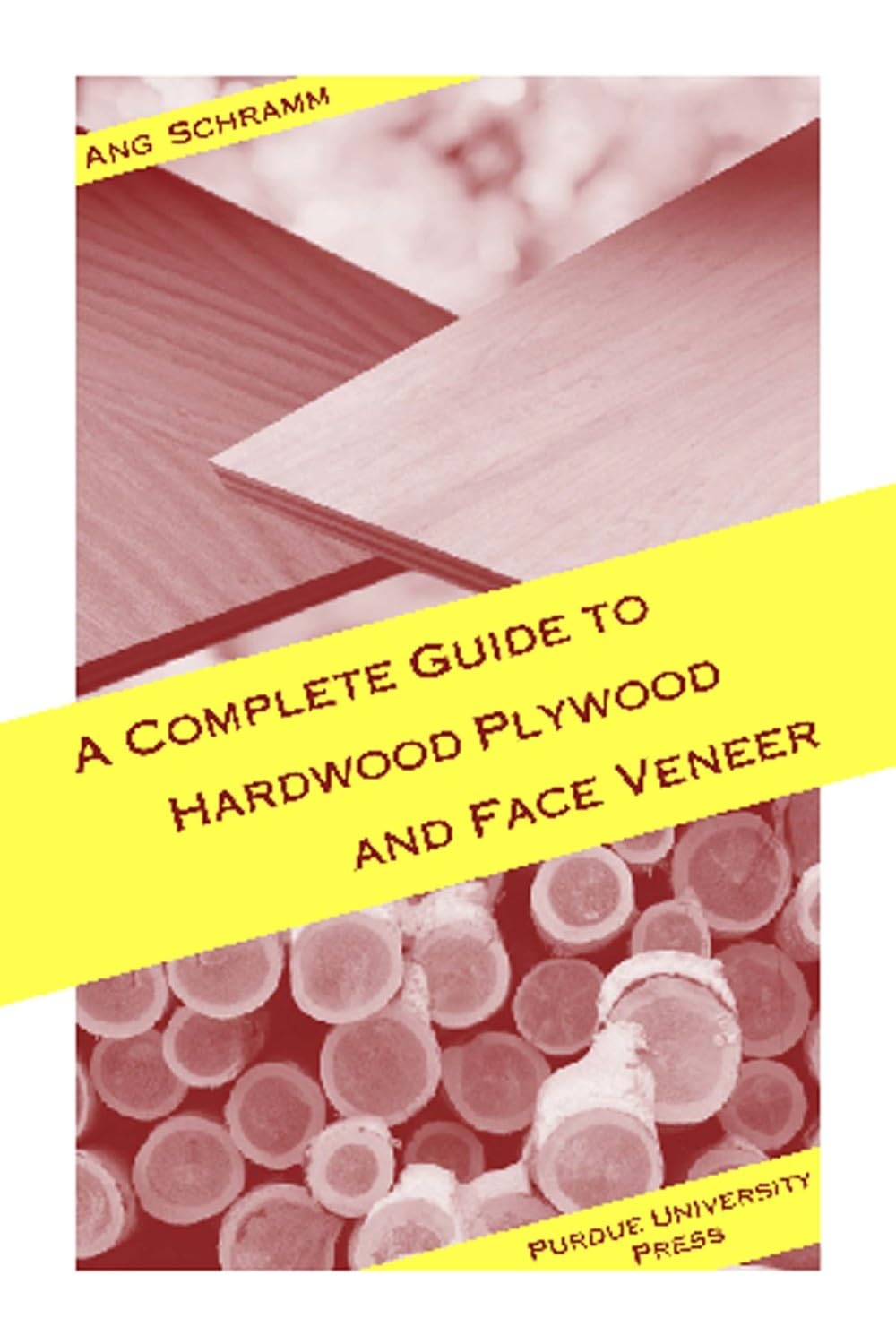
Complete Guide to Hardwood Plywood and Face Veneer
Product details
| Management number | 233298539 | Release Date | 2026/06/27 | List Price | $10.78 | Model Number | 233298539 | ||
|---|---|---|---|---|---|---|---|---|---|
| Category | |||||||||
Assuming you don't want your cabinets, ready-to-assemble (RTA) furniture or other products made from plywood to smell like dirty diapers, a quick look at the Complete Guide to Hardwood Plywood and Face Veneer by Ang Schramm is in order. According to Schramm, South American Lapuna Sumauma wood has a high starch content that is susceptible to attack by anaerobic bacteria while sitting on the bottoms of holding ponds at the veneer plant. The byproducts, butyric acid and caproic acid, exude an odor that may not always be noticeable in properly dried wood in dry conditions but becomes offensive when humidity increases. As can be expected, veneer from this species is in low demand and therefore cheap, and manufacturers buying on price point alone can find themselves in possession of a product whose odor is, at this time, irreversible and without remedy. Not all of the content in this book is so esoteric. The book's 157 pages are organized into sections covering variations in appearance, the veneer manufacturing process, types of veneer matching, grades and product standard, substrates, the hardwood plywood manufacturing process, meeting customer expectations, and troubleshooting common problems. Liberally sprinkled with black-and-white photographs and diagrams, the book gives excellent detail on describing, the processes of plywood and veneer manufacturing so the reader can better understand the advantages and limitations of the product and the various processes. For instance, the chapter on troubleshooting provides a diagram showing why one side of veneer (tight side) is more heat-reflective and impervious to finish than is the other (loose) side, which is more light-refractive and absorbent. By understanding the relative differences between the sides and why those differences exist, it is then possible to present an explanation why starch book-matching veneers has the problem of adjacent sheets of veneer having different light-reflecting/refracting and finish absorbing characteristics. The manual can then proceed to explain different techniques to overcome the variation and present a more uniform appearance (in this case, glue-sizing or wash coating) and to recommend specific products to help achieve the desired result. Read more
| ISBN10 | 1557532427 |
|---|---|
| ISBN13 | 978-1557532428 |
| Language | English |
| Publisher | Purdue University Press |
| Dimensions | 6 x 0.25 x 8.75 inches |
| Item Weight | 8.8 ounces |
| Print length | 150 pages |
| Publication date | April 1, 2003 |
Bestseller ranking
Applicators


Customers who viewed this product also viewed
Diseases, Illnesses & Injuries



Correction of product information
If you notice any omissions or errors in the product information on this page, please use the correction request form below.
Correction Request Form